Technical Note
The Shimadzu Gas Chromatography Price I Almost Got Wrong
The small stuff matters more than you'd think
Before the GC broke, our relationship with this distributor was mostly tiny orders. The first was a 115 multimeter fuse. It's a small ceramic thing that costs about $11, but it was holding up our maintenance team. I called them, expecting to leave a voicemail. Instead, a real person asked for the multimeter model, checked the fuse rating, and sent me two of them. "One is a spare," she said. I've never had a supplier do that on an $11 order.
Then there was the depth micrometer. We use it maybe four times a year. I kept mixing up the model number, but I described the measurement range and what we needed it for. The distributor sent me the right one—with a calibration certificate. That saved me from ordering the wrong tool twice.
How to troubleshoot a Rice Lake load cell (for free)
The moment I really started trusting them was a Thursday. Our floor scale started giving wild readings. The scale housing said Rice Lake, but we didn't have a service contract. My maintenance tech had already spent an hour checking the display and the cable. I called the distributor, half expecting to hear "we don't work on those."
Instead, she walked me through how to troubleshoot a Rice Lake load cell on the phone. She gave me a simple sequence:
- Check the excitation voltage at the junction box.
- Measure the signal output in millivolts with no load.
- Inspect the cable and connector for moisture or loose pins.
- Do a zero-balance test to see if the reading returns to zero.
It turned out to be water in the connector. We dried it, put dielectric grease on it, and re-sealed the box. The scale worked again. The technical support cost us nothing.
That's what small orders are really for. They're a test. Vendors who pass it get the bigger orders.
The Shimadzu gas chromatography price wasn't what I expected
Back to the GC. In October 2023, I asked three suppliers to quote a gas chromatograph with an autosampler and a split/splitless inlet. The three base quotes were $32,000, $34,000, and $38,000. The Shimadzu quote was the middle one. I almost started negotiating with the $32,000 vendor until I laid all three side by side.
What most people don't realize is that the base instrument is only the beginning. The $32,000 quote didn't include installation. It didn't include software. It didn't include training. The $38,000 quote included all of that plus a year of service. The $34,000 Shimadzu quote came with an itemized list of consumables and recommended service kits from the Shimadzu store. That made it feel less like a sales pitch and more like a total cost of ownership document.
Here's something vendors won't tell you: the first quote is almost never the final price. There's usually room to negotiate once you've proven you're a reliable customer.
The upside was saving $2,000 by going with the lowest bid. The risk was uncertain support. I kept asking myself: is $2,000 worth potentially waiting a week for a service visit when our lab can't afford a day of downtime? The expected value said the safer bet was the Shimadzu quote, but the downside of the cheapest one felt too big.
The most frustrating part of comparing quotes was how different the proposals were. You'd think a quote for a gas chromatograph would be a simple document. It isn't. One vendor listed the detector as an option. Another didn't mention the computer. A third included the column but not the deactivated liner. I had to build my own comparison from scratch, line item by line item.
Over six years, I've tracked maybe eighty equipment purchases. Maybe seventy-five, I'd have to check the spreadsheet. But I've never seen a purchase decision where the cheapest quote was also the cheapest to own.
So what did the Shimadzu gas chromatography price actually look like? For us, it was $34,000 for the base instrument and just over $51,000 for the installed system with software, an autosampler, a column, training, and five years of service. That's a 50% gap hidden in fine print. The number to budget for is the second one, not the first.
There's something satisfying about a purchase that goes right. After all the spreadsheets, the installation itself was almost boring. The GC arrived on schedule. The field engineer set it up. The training session ran long because our lead chemist kept asking good questions. Boring is good. Boring means nobody is calling me about a failed acceptance test.
I don't buy from the lowest bidder anymore. I buy from the vendor who helped me with an $11 fuse and a free load cell diagnosis, because those little moments told me more about their service culture than any brochure. Small orders are not an inconvenience. They're a preview of what will happen when the big order goes wrong.
That said, this is my experience at a mid-size lab. If you're buying a fleet of GC systems, your negotiation leverage is different. If you're a one-person shop, you'll need different support. But the principle stays the same: track the total cost, not the sticker.
I still check the Shimadzu store for replacement parts, and I still call our contact when I need a quick answer. But the real lesson is that the best price is not the one on the bottom line. It's the one that includes the cost of the nightmare you didn't have.
Pricing in this article comes from one set of quotes we received in October 2023. Actual Shimadzu gas chromatography prices vary by configuration, region, and time of order. Verify current pricing with an authorized distributor or the Shimadzu store before planning your budget.
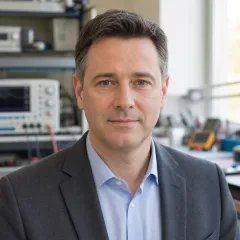
Marcus Feld
Marcus Feld is an electrical test and measurement analyst specializing in multimeters, oscilloscopes, clamp meters, insulation testers, spectrum analyzers, and data loggers. He applies IEC 61010-2-030 and IEC 61010-031 concepts while examining measurement category, bandwidth, true-RMS response, input loading, and stated uncertainty. His work helps maintenance engineers and test teams choose safe instruments with performance suited to the signals and environments they actually measure.
Ask about this topic