Technical Note
When the Gas Chromatograph Failed Before a Big Deadline: A Shimadzu LC-2010 Price Lesson
It was 4:47 on a Thursday afternoon in March 2024 when the email landed. Our biggest client needed a residual-solvent release test completed by Monday at 8:00 AM. One batch. One go/no-go decision. And if we missed it, the penalty clause in the contract would cost us about $50,000—not to mention the kind of trust damage that never shows up on a spreadsheet.
I manage lab operations at a mid-sized contract testing company. I've coordinated about 80 rush jobs over the last 12 years: weekend service calls, same-week instrument moves, quotes that had to be rewritten before lunch. This one should have been routine. It wasn't. And the signs were there weeks before the GC actually gave up.
The warning signs we kept postponing
Our primary gas chromatograph was 11 years old. It wasn't a Shimadzu, but honestly, the brand didn't matter—most instruments start showing their age eventually. Autosampler hiccups every couple of weeks. Retention times drifting a little more than they used to. System suitability still passed, but by narrower margins. We had a preventive maintenance visit booked for February and bumped it to April because we didn't want to lose three billable days.
In March 2024, the GC stopped waiting for April.
It failed during a blank run on Friday morning. The error screen showed a pressure problem, then a flow problem. Our senior chemist swapped the septum, changed the inlet liner, checked for leaks. Nothing helped. I'm not a service engineer and I can't speak to the internals of an 11-year-old GC. What I can tell you from an operations perspective is simpler: we had about three days until the client deadline and no working instrument.
Friday: The options were all bad
The service provider couldn't get anyone to us before Monday afternoon, and even then the technician wouldn't promise a part without seeing the instrument first. Monday afternoon is five hours after our deadline—or rather, five hours after the deadline that mattered.
Renting time at a partner lab collapsed for the usual reason. The method was validated on our system. Transferring it to another lab, even a good one, would have taken longer than we had and left zero room for a do-over.
So at about 11:30 I called Shimadzu and explained the situation. I didn't ask for a fancy demo or a nine-month implementation plan. I asked whether a gas chromatography system could physically be on our loading dock by Saturday.
The applications rep didn't oversell it. He asked what the method needed, then came back with a price quote for a Shimadzu gas chromatography system—flame ionization detector, headspace sampler, installation included. The system was in stock at a regional warehouse. Expedited freight and a weekend install slot were technically possible. He also made clear there were no guarantees. It was still the only option that could meet the client's deadline.
The number on the quote was significant. It was also less than the $50,000 penalty clause and a whole lot less than losing a ten-year relationship.
I went back and forth for about an hour. Waiting for a repair was the responsible choice on paper. It was also a gamble: even if the technician arrived Monday, we'd miss the deadline. Buying a new GC felt extreme, but the replacement was already in our capital plan for Q3. The worst case with buying was a budget line that moved earlier. The worst case with waiting was the contract itself.
Our CFO approved the purchase at 2:15 that afternoon with a one-sentence email. The purchase order went out at 2:26.
Saturday: Installation, and one surprise
The new Shimadzu GC arrived at 8:20 Saturday morning. The field service engineer was there by 9:00. I should add that none of us planned to spend that weekend in the lab—we paid extra for the weekend installation, and it was worth every dollar.
Here's the part I didn't expect. The engineer got the system set up without much trouble. Then, during the gas supply check, he found a failing regulator on our carrier-gas line. The regulator had been feeding contaminated gas into the instrument—slowly, probably for months. It had nothing to do with the new GC. It also explained a lot about why the old one had been acting strangely for so long.
That moment was uncomfortable. We had blamed the instrument, but part of the real problem was in our own lab. A routine maintenance visit in February would likely have caught it.
Monday morning
By Sunday afternoon, the new system passed installation checks and a full system suitability run: six injections of the calibration standard, relative standard deviation well under 2%. Our senior chemist stayed late to run the client samples. At 7:43 Monday morning—17 minutes before the deadline—the report was in the client's portal. The batch passed.
Making the deadline felt great. But the lesson wasn't really about gas chromatography.
The real cost, and the Shimadzu LC-2010 price
After the dust settled, I totaled the emergency: rush freight, weekend labor, overtime for our own staff, the premium we paid because we couldn't shop around. When you buy an instrument in a panic, you pay a premium that never appears on the invoice as a line item. I think of it as a panic tax.
A month later, the same pattern nearly repeated with an HPLC. We had been outsourcing a stability test for about a year at roughly $4,000 a month. In-house, we kept delaying the purchase because the price felt like something we had to research forever. When I finally asked Shimadzu for numbers, the Shimadzu HPLC LC-2010 price turned out to be far less scary than I had built it up to be.
To be clear, the LC-2010 is not the newest model Shimadzu makes. But for straightforward UV detection QC work, it's still a workhorse, and because it's an integrated platform, the complete-system price tends to be easier to justify than a fully modular setup. The quote we received in spring 2024, including installation and a limited warranty, was about $33,000 in our region. That's a ballpark, not a promise—prices shift with configuration, exchange rates, and whether you buy certified pre-owned or new. But the math was obvious: the LC-2010 paid for itself in less than a year against the outsourcing fees. We approved it with no drama, and no penalty clause hanging over anybody's head.
That contrast is the thing I keep telling people. The GC emergency got all the attention. The LC-2010 decision was the one that actually improved our numbers. Both had sat in the same "someday" pile. The difference was timing: one decision forced our hand, and the other didn't.
What I'd do differently
Looking back, I should have insisted on the February maintenance visit instead of postponing it. At the time, protecting three billable days felt like the smart call. In hindsight, it was the most expensive decision we made all year—not because the preventive maintenance would definitely have saved the old GC, but because it would have forced us to inspect the gas line and revisit our backup plan before the clock was running.
We now follow a simple rule: scheduled maintenance dates don't move unless there's a genuine emergency, and we refresh instrument quotes every January so we already know what a replacement GC or HPLC costs. The 12-point checklist I wrote after that weekend has saved us an estimated $20,000 in avoided rush fees and rework since.
Your lab won't have the same equipment, the same contract, or the same deadline, so take this for what it is. If you're searching for a Shimadzu gas chromatography price or a Shimadzu HPLC LC-2010 price because you're thinking about a replacement, get the quote now, while everything is working. Compare the full installed cost, not just the sticker price. And whatever you do, don't cancel the maintenance visit.
Five minutes of verification beats five days of correction. In our case, it was closer to five weeks.
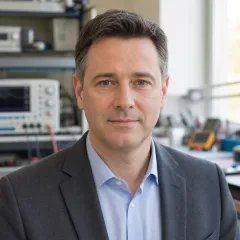
Marcus Feld
Marcus Feld is an electrical test and measurement analyst specializing in multimeters, oscilloscopes, clamp meters, insulation testers, spectrum analyzers, and data loggers. He applies IEC 61010-2-030 and IEC 61010-031 concepts while examining measurement category, bandwidth, true-RMS response, input loading, and stated uncertainty. His work helps maintenance engineers and test teams choose safe instruments with performance suited to the signals and environments they actually measure.
Ask about this topic