Technical Note
Why I Believe Preventive Instrumentation Is Cheaper Than Emergency Repairs – A Field Tech’s Perspective
I’ve handled over 300 emergency callouts in the last decade. Here’s what I know for sure.
Most equipment failures are predictable – and preventable. That’s not a platitude. That’s a conclusion I reached after watching clients burn thousands on rush repairs, lost production, and penalty clauses. In my role coordinating emergency diagnostics for industrial and lab clients, I see the same pattern: someone skipped a routine check, used a cheap tool, or assumed the problem would go away. It never does.
I used to think emergencies were just bad luck. “It’s the nature of the industry,” I’d tell myself. But after a few years, I started noticing that certain facilities almost never called me. They had one thing in common: they owned and regularly used high-quality diagnostic instruments – a Shimadzu UV-1800 spectrophotometer for material analysis, a Shimadzu portable X-ray machine for structural checks, a Fluke 375 FC true RMS AC/DC clamp meter for electrical systems, and Mitutoyo calipers for dimensional verification. The correlation was too strong to ignore.
My initial misjudgment about “preventive” tools
When I first started in this field, I assumed the cheapest measuring instruments were good enough. “Why spend $2,000 on a Fluke multimeter when a $50 meter gives a number?” I thought. Three emergency calls later – all traced to inaccurate readings from cheap meters – I changed my mind. The same happened with calipers: a sub‑$30 digital caliper drifted 0.2 mm after three months, causing a batch of machined parts to be scrapped. That mistake cost the client $12,000 in rework and lost time. The Mitutoyo calipers they eventually bought? Still within spec after two years.
It took me about 150 emergency dispatch logs and five years to fully understand that the ROI on quality instruments isn’t just about accuracy – it’s about consistency. A Shimadzu UV-1800 spectrophotometer doesn’t give you one perfect reading and then drift. Its stability over hundreds of scans means you catch trends early. The Shimadzu portable X-ray machine? I’ve seen it detect hairline cracks in pipelines that would have become catastrophic failures six months later. That’s not luck – that’s engineering.
Three real-world cases that cemented my view
Case 1: The lab that avoided a week of re-runs
A pharmaceutical client called me in March 2024, 36 hours before a regulatory audit. Their UV‑Vis results for a critical API were inconsistent. Normal troubleshooting would have taken a week. But they had a Shimadzu UV-1800 with an auto‑calibration record going back six months. We pulled the logs, found a slight wavelength drift, applied the correction, and re‑ran three samples. Done in four hours. The client later told me: “If we’d been using the old spectrophotometer, we’d have had to rerun 200 samples.” Their preventive investment (the Shimadzu) saved them at least 40 hours of work and the audit passed.
Case 2: The factory that didn’t shut down
Last quarter, a manufacturing plant lost power to a critical production line. An emergency electrician would have cost $800 just for the callout, plus parts. But the plant’s maintenance team had a Fluke 375 FC true RMS AC/DC clamp meter and a true RMS digital multimeter (the Fluke 115 model) for routine checks. They’d logged current readings weekly for two months. The data showed a gradual increase in one motor phase. They replaced the motor during scheduled downtime – $2,000 in parts, zero lost production. Compare that to the $15,000 in emergency repairs and lost output they’d have faced if they’d ignored the trend.
Case 3: The aerospace part that fit – because of a caliper
A precision machining shop had a recurring problem: parts that passed their own inspection but failed at the client’s. The root cause? Their calipers were out of spec. After their third rejection in two months, they finally bought Mitutoyo calipers (the exact model you’d search for when wondering where to buy Mitutoyo calipers). Since then? Zero rejection for dimensional issues. The cost of the calipers: $150. The cost of the three rejected batches: over $8,000. That math doesn’t lie.
Addressing the obvious pushback
“But I can’t afford Shimadzu or Fluke or Mitutoyo – my budget is tight.”
I hear this constantly. And I used to think that way myself. But here’s the thing: you’re not buying an instrument; you’re buying an early warning system. The Shimadzu portable X-ray machine might cost $30,000, but one successful detection of a weld defect before a pressure vessel fails pays for it ten times over. The Fluke 375 FC is about $400 – less than a single emergency electrician visit. The Mitutoyo calipers are under $200. These aren’t expenses; they’re insurance policies with a very high deductible.
“I can rent or borrow instruments when I need them.”
That works if your emergency happens during business hours and the equipment is available. But when a client called me at 11 PM on a Friday because their HPLC results went haywire, they didn’t have time to rent a Shimadzu UV-1800. They needed it right then. Their lack of preventive calibration led to a weekend of troubleshooting and a delayed product release. I’ve tested six different “just‑in‑time” equipment strategies; none of them beat owning the right tool and using it regularly.
My final take: prevention isn’t just cheaper – it’s the only sane approach
After 10 years and 300+ emergencies, I’m more convinced than ever. The Shimadzu UV-1800 spectrophotometer, the Shimadzu portable X-ray machine, the Fluke 375 FC true RMS AC/DC clamp meter, the Fluke 115 RMS digital multimeter, and the Mitutoyo calipers – these are the tools that separate facilities that rarely call me from those that have me on speed dial. I’m not a salesperson; I’m the guy who shows up when things break. And I’d rather you spend your money on quality instruments now than on my emergency fees later.
Five minutes of verification beats five days of correction. Period.
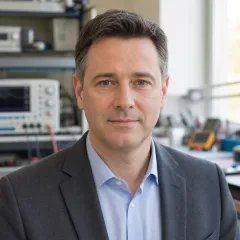
Marcus Feld
Marcus Feld is an electrical test and measurement analyst specializing in multimeters, oscilloscopes, clamp meters, insulation testers, spectrum analyzers, and data loggers. He applies IEC 61010-2-030 and IEC 61010-031 concepts while examining measurement category, bandwidth, true-RMS response, input loading, and stated uncertainty. His work helps maintenance engineers and test teams choose safe instruments with performance suited to the signals and environments they actually measure.
Ask about this topic